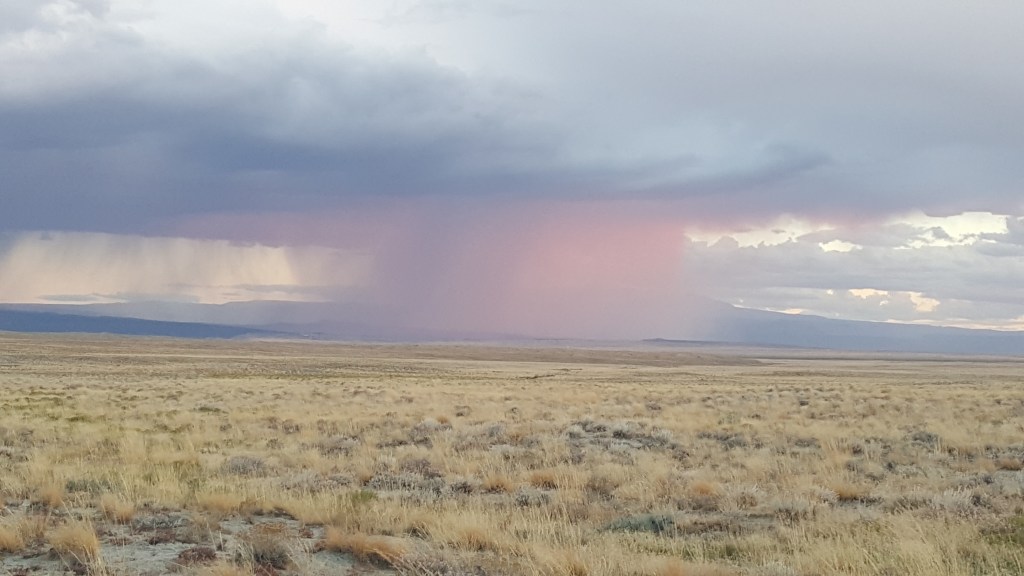
Pronghorn
Pronghorn Antelope (aka. Prairie Goats, Speed Goats, Sage Goats, Lope) are native only to North America. They are the only ungulate that grows branched horns made of hair and also the only mammal that grows “horns” and sheds them. I have personally clocked them at 52 MPH and have observed them, in one bound, clear a well maintained county road from burrow ditch to burrow ditch (25+feet).
There are three sub species of pronghorn in North America; the American Pronghorn, the Mexican Pronghorn and the Baja Pronghorn. It has been proposed that the Mexican pronghorn has a sub-species called the Sonoran and that the American Pronghorn has a sub-species called the Oregon. However, these sub-species have not been proven genetically. They have very keen eyesight and when threatened they can flair the whites hairs on their rump patch, the reflection of which on a sunny day can be seen for several miles especially from a group of several on up to a large herd.
They are also very curious and inquisitive. So much so that I have enticed bucks and does alike to come within 20 yards simple by using a plastic grocery sack and sitting on the ground in a patch of sagebrush all this while a stone’s throw from the vehicle. On more than one occasion I have been on a coyote stand, hand calling with antelope coming right up and almost stepping on me.
It is my opinion and experience of hunting Pronghorn in Wyoming, Utah and Colorado for nearly 40 years, that if you have to shoot over 150 yards at an Antelope you are about to or in the midst of doing something illegal, immoral, or unethical. Or perhaps your truck ran out of gas and at that exact same moment the battery died, locking you inside and you quite literally couldn’t get any closer.
A Late Summer’s Buck
I first spotted the buck in early to mid-June of that year. There were several bucks batching (bachelor group) it up in this area where I had been blading road. He wasn’t the largest buck of the group, he didn’t have the heaviest mass, the longest length, or the deepest prongs, although none of the other had all those things going for them either. What this fella had was symmetry. He was the most perfect buck Antelope I had seen in a long time. When he was broadside his horns lined up perfectly, like one single horn and when he looked at you they formed a perfect heart on the top of his head. This is when the “Heart Buck” came to be.
With some odds and ends I had around the shop I built my daughter a 260 Remington hunting rifle. I didn’t get any pictures of the project when it was coming along, only finished pictures years later. In the photos her rifle is the one that looks “tiger striped.”
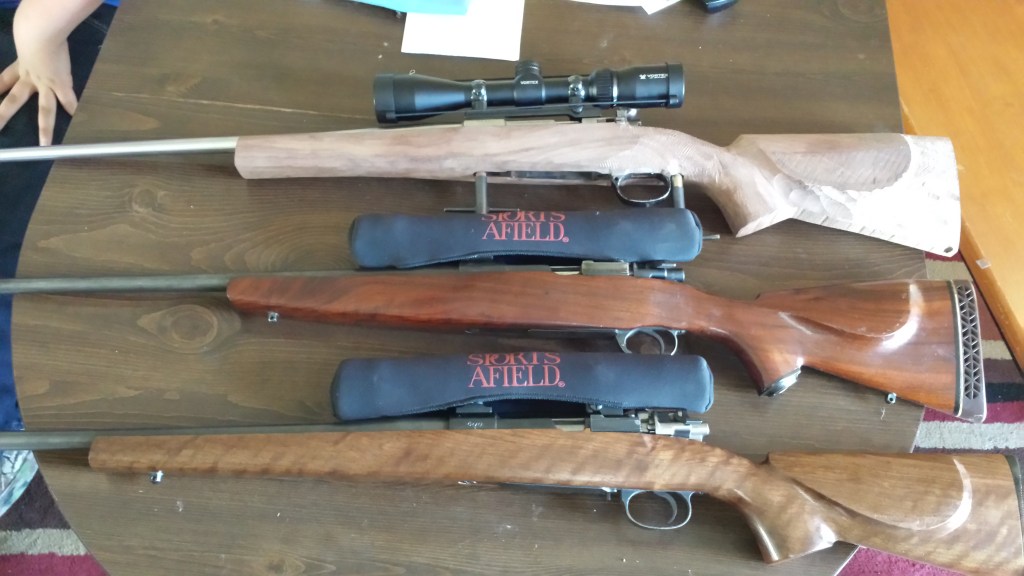
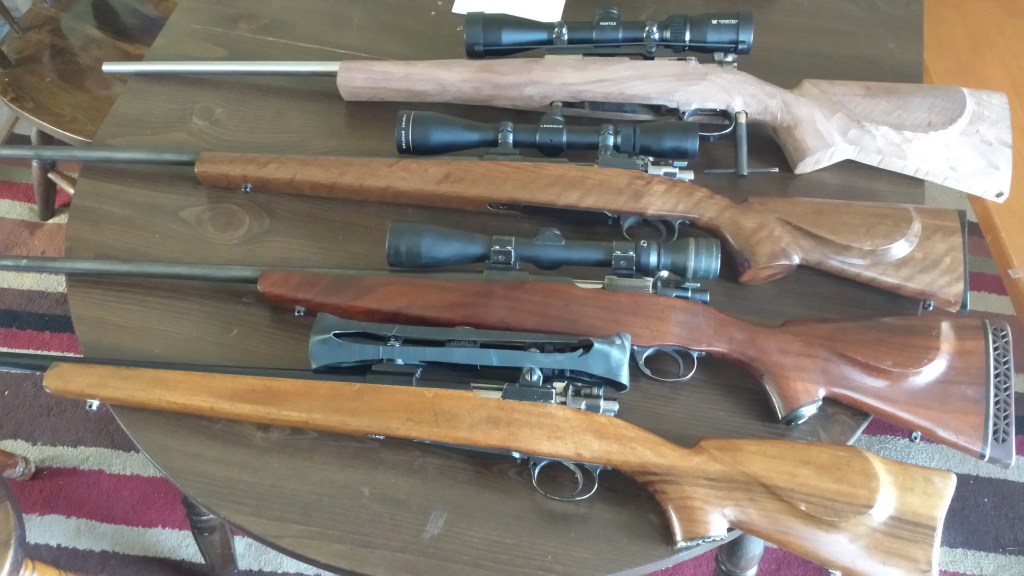
With the rifle complete next came load development. I settled on a 120 grain bullet at a reduced velocity to minimize recoil and maximize terminal performance at close range. With a range session to sight-in and a few varmint loads to break the rifle and shooter in, we were off to the races.
About the end of July all the bucks begin marking out their territories and driving the younger, less dominant bucks off. I was hoping he wouldn’t be to far from where I had originally observed him. Even so Antelope are not hard to find in Wyoming and to find the same one isn’t much of a chore at all.
When my daughter first laid eyes on him she said, “Dad! His horns look like a heart.”
“Well, there are others. Lets take a look at them and you can decide from there.”
“Nah, I don’t think so,” she said. “That’s the one.” And so it was, the “Heart Buck” was marked.
Although appearing less dominant he ended up dominating the better side of a 5 acre BLM reservoir in my opinion. Of the bucks hanging out there that summer only three were dominant enough to share the reservoir, the other four were evicted to less favorable locales.
Early September and opening morning arrived. That year it fell on a week day and my daughter was jazzed to be one of half the kids in her class to miss school for opening morning (it’s a way of life where we live.) We hit the gas station on the way out of town and bought our traditional first hunt snacks (a Kit-Kat, jerky and cheese stick, and a V8).
By the time we got on site Mr. Heart was already busy pushing his harem around. We pulled onto a well location and watched him for a bit to determine what he was attempting to do. The harem of does were content to just meander through the sage brush up a ridgeline with him close in tow. He would stop periodically to sniff the air, continuously on the lookout for danger and the threat of other potential suiters.
“Can I shoot him dad?”
“Not yet babe. I want him to be closer and out of the sagebrush.”
We left the location heading back to the main road. I had an idea where them does wanted to go so we drove up the main road about 1/4 mile farther, I pulled off and we waited.
“They’ll be topping out this ridge behind us here to the left, if they don’t get boogered crossing the road on the way.”
She was up, knees in the seat looking out the back window with anticipation. Fortunately no oilfield pumper drove up the road so when they came into sight, right on schedule if there can be such a thing, my daughter exclaimed, “There he is!”
“Not yet. He’ll be the last one. Get out, quietly, don’t slam the door. Take you rifle, load a shell in the chamber and step out in front of the vehicle and wait. He probably won’t stop so he’ll still be moving. Put the crosshairs right on the corner of the white box and squeeze the trigger.”
(Antelope have a white patch of hair amidst the orange hair on their side. It forms a square on their side, one corner of which is a great point of aim for new shooters as it marks the sweet spot just behind the shoulder for a perfect lung shot every time. They typically run about 20-25 yards after being hit there but under the ideal conditions, such as close range matched with terminal performance, and the animal not being excited, they will drop on the spot.)
She got out and positioned herself on one knee. About 15 or 20 does and fawns walked by. I’m sure the “fever” was hitting her and the adrenaline was pumping pretty good. We’d trained for this. When he finally appeared from behind the ridge and saw the vehicle he stopped for a brief moment. Concluding that there was no immediate danger he proceeded along in the procession.
My daughter was fidgeting for just a bit, a little shaky it looked like and then, KABOOM!
I turned in my seat in time to see the buck collapse on the ground. The procession of does and fawns all stopped and turned to see what had just happened. My daughter stood up, ejected the casing and the herd eventually pressed on up the ridge over the hill.
I paced the distance from where she shot to the buck, it was 67 paces. That’s 67 paces from the truck which was about 20 yards off of the road. Who says Antelope are hard to hunt? I’ve been shooting them in that manner for nearly 40 years.
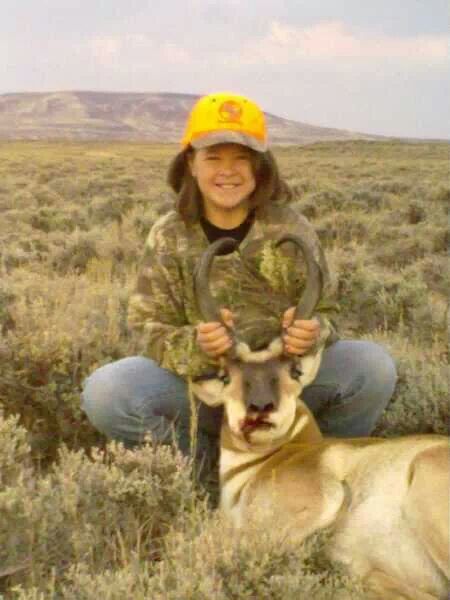
Nevertheless, the time and effort that goes into success, no matter how easy it is or how difficult it actually turns out to be is a time honored tradition in my family.
Success, Sadness and Reflection
No matter how excited she appeared I could still sense sadness. It’s understandable, I have felt it and continue to feel it every time I harvest an animal. We spent days, weeks, months searching for and finally locating the “perfect” animal. We spends days, weeks, months observing that animal, learning their habits, where they sleep, where they eat, where they go to the bathroom. We know who they hang out with, we inject ourselves into their lives and when the time of our choosing comes we harvest them.
I instruct my family and those who hunt with me that we don’t celebrate with hooting and hollering, leaping and dancing, crassness or obscenities aimed at the animal. That is just plain disrespectful. I won’t stand for arrogance, lewdness, or disrespect to the animal in my hunting party. You just took a life to preserve yours.
You wanna celebrate? Celebrate the fact that God gave you the skill to make a clean one shot kill. Celebrate the fact that God has gifted you with the knowledge to build accurate firearms and dependable ammunition (if that’s your trade). Celebrate the fact that no one in your hunting party was injured (you arrived safe and everyone goes home safe). Celebrate the fact that God has given us such an abundant food source as the animals we pursue and that you’ll have meat on the table for the winter.
We have been created as “imagers” of God and stewards of His creation. Dominion has been given to us which means we do not destroy just because we can, that is what the evil one does. Our job is to manage and to do that wisely.
As you sit around the supper table this Fall, and every season for that matter, celebrate and thank God for your Faith, your Family, and the Outdoors!
 Those Who Can't